I.
Introductions:
Instructor:
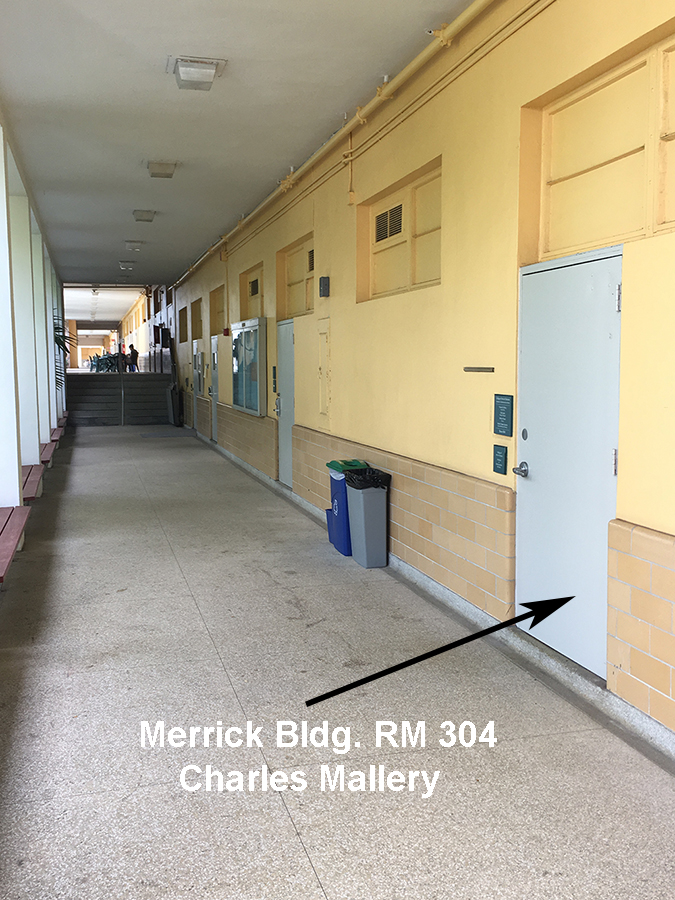
Charles H. Mallery
Office:
Merrick Building - Room 304
Time & Place:
fall
- section OT
- 9:40am to 10:55am - TR
- section T
- 6:00pm to
7:15pm - T
summer
- section A - 8:30am to 10:30am - MTWRF
Workshops:
fall
- section T -
6:00pm to 7:15pm.
summer -
section A - WF - 9:45-10:30am.

|
|
||||||||||||||



III. Some
Goals for our Biology 150 Class...
to clearly explain the
fundamental concepts
of life and of cells at the
cellular, genetic, and organismal levels of
biological organization.
based
upon - Transforming
Undergraduate Education for Future
Research Biologists.
Committee on Undergraduate Biology Education
National Research Council (2003)
18
Central Themes
[of 85
Significant Concepts] Every
Biology Student Should Know.
we
will stress:
Application of the Scientific
Method within
the discipline of biology
Cell origins, organization, and structure
Principles of Chemistry and Physics that apply
to Biology
Principles of Evolution, especially molecular
evolution
Modern Molecular Genetics
Physiological applications of Homeostasis
(constancy of cell environment).
I
will attempt to tell "a
Saga" about some of the key experiments that
epitomize modern biology
We
will assess the
knowledge you have acquired via testing.
IV. PEDAGOGICAL THEMES
of COURSE:
To Learn a BROAD BASE of SCIENTIFIC
FACTS...
a foundation of factual knowledge is necessary for
understanding
biological concepts; unless one knows
a fundamental set of
observations or "facts" beforehand, it is difficult to
explain the
significance of a concept.
To Become
BIOLOGICALLY LITERATE...
names, terms, definitions, 18 themes all
biologists should know:
the great experiments of biology taught
via practical applications.
To
Learn the SCIENTIFIC METHOD...
begin to
think like a scientist/biologist
recognize the
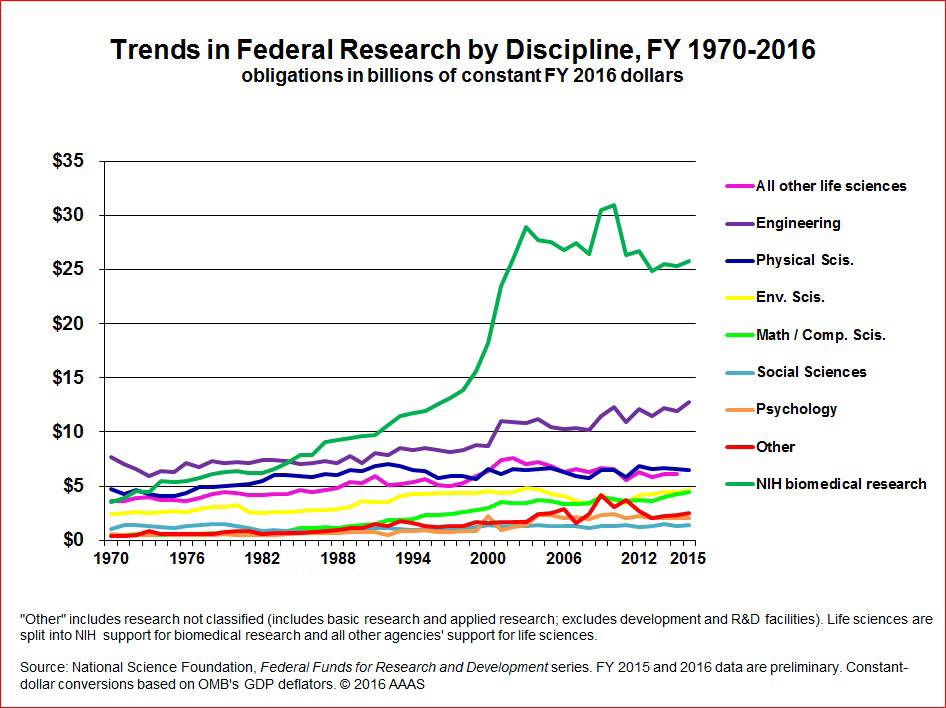
cost*
of doing science in
21st
Century Scientism*
Back to Blackboard
SKIP THE MATERIAL BELOW.....
To Learn &
appreciate the HISTORICAL CONTEXT of
Biology...
science
changes society (we live in a technocratic
age of science)
egotism can drive science
20th century =
age of physicist &
chemist;
but 21st century is
the age of the Biologist
To see
the
RELEVANCE of Biology...
how does
your own body work
how/why did
family member(s) get a certain disease
To
Learn Biology for
SOCIETAL REASONS...
what may I do to protect our Earth?
prior concepts? -
are my prior concepts correct or incorrect
to
enhance your own personal knowledge base.
We'll
use an
INQUIRY based approach
to the Science of Biology...
- the emphasis
will be placed upon inquiry & experimentation.
- look at
case history's of experiments
& the data for
interpretations,
look for
competing
hypotheses & identify what is yet unknown.
- the baseline facts of an
introductory course may change change with
time,
but the analytical
skills you learn here will
serve you for a lifetime.
Exactly
what does Inquiry Based Research Include?*
an inquiry based
research approach
includes...
Asking Questions &
Analyzing Data to find Answers...
- for each new concept or
testable experiment...
We
Ask Ourselves:
1.
What motivated researchers to do this
experimental study?
2. How were the experiments
designed?
3. What new methods or analytical
techniques were needed?
4. How unpredicted was the
outcome?
5. How did the
researchers interpret their data?
6. Has subsequent work
changed our understanding?
7. Did
a discovery influence future course of
Biology?
Biology is
a collaborative endeavor, so we'll also be using
Social Learning Communities
which we call... Workshops*:
The
Workshops are Social
Learning Communities, where student
participation is the basis for llearmin.
your role is that of a Learner and also as
a teacher, to help others in your Workshop
Community benefit from your knowledge.
Small Study Groups are one reason students
who major in the sciences persist in the
sciences, rather than switching to another
major.
Mastering biology
involves "learning" the content of the subject
matter, but also "learning to be" a biologist... a full
participant in the field of biology, which means
acquiring the practices and norms established by
the practioneers of biology, kind of like
apprenticing or supervised graduate study. The
idea is to engage new students, as yourself, in
learning by
productive exchange and inquiry.
Your Social Learning
Community
will do practice problem sets* that are designed to
help you become more familiar with the
material presented in class in a student oriented
environment. The Workshops employ Peer Led Team Learning, a concept where other biology
students (majors) facilitate a series of
practice problems for currently enrolled
students. As you review the lecture material,
a Peer Mentor will encourage
engagement by asking questions or initiating
discussions about the material. Lecture provides
the content, the Peer Mentor stimulates social learning
interaction, and you gain a
better understanding through focused
conversation.
IV.
Book - Campbell Biology
by Lisa
Urry, M. Cain, S. Wasserman, P. Minorsky, R.
Jackson, & Jane Reece,
Pearson Education
- 12th
edition 2020 56 chapters and 1464 pages -
(way too much)
Campbell Biology
Gateway & Amazon
Book
has 3 main objectives...
1. it explains biological concepts clearly
& accurately in an engaging
narrative within context of unifying themes of
molecules, energy,
& evolution.
2. it helps you, as a student
(learner), develop a more positive
& realistic impression of science & how it
is done
3. it stresses inquiry based learning by
looking at how biologists think,
by presenting real data
to be interpreted by the student,
offering evidence for competing hypotheses,
and referring to works in progress,
and noting what biologists do not know.
You cannot review a presentation lecture just once & understand it
completely:
REPETITION is a key ingredient in
learning fact based materials.
> The lectures
& book are a resource for 2 main themes for our study of biology...
1. Biological Principles
COMMON to
ALL living organisms:
a) cell
chemistry
b) cell
structure
c) cell function
d) cellular genetics
2. Examples of
how particular organisms
work,
in
their own habitats,
especially
via some vertebrate examples (e.g.,
homeostasis)
Remember our class
presentations
will be available in Blackboard...
a) anytime
(24/7)
b) anywhere (you may
choose to connect to the internet)
If you have comments or
suggestions, email me at
cmallery@miami.edu
University of Miami Home Page | Biology Home Page | Dr. Mallery's Home
Page |
copyright c2021,
Charles Mallery,
Merrick Building room 304
Dept of Biology,
in Cox 126 in Cox 145 or tba in Merrick 309
Home |
About |
News |
Syllabus |
Lecture-outlines |
Links |
FAQ |
Contact
|
Site map
Home |
About |
News |
Syllabus |
Lecture-outlines |
Links |
FAQ |
Contact
|
Site map
Home |
About |
News |
Syllabus |
Lecture-outlines |
Links |
FAQ |
Contact
|
Site map